
AMD’s AI Infrastructure Deal in Saudi Arabia Signals Major Data Center Expansion With 250 MW on the Horizon

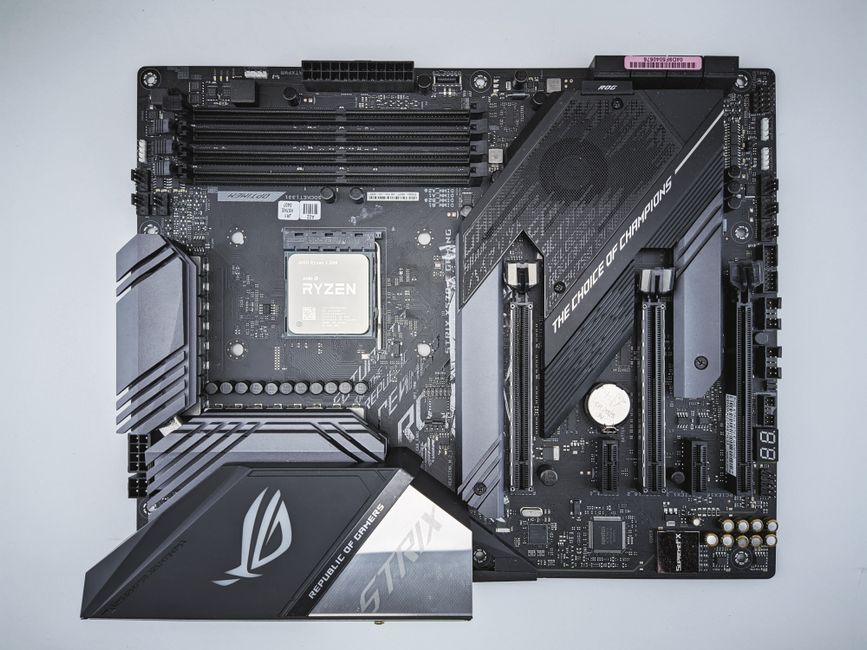
AMD Instinct Saudi Arabia: Advanced Micro Devices has officially brought its Instinct GPU systems online in Saudi Arabia, marking a significant milestone in the chipmaker’s efforts to capture a larger share of the Middle Eastern artificial intelligence infrastructure market. The deployment represents the first phase of what industry observers expect to become a substantially larger commitment, with an additional 250 megawatts of computing capacity potentially coming online in the coming quarters.
For AMD, the Saudi Arabian deployment carries implications that extend well beyond a single data center contract. The company has been working to position its Instinct family of accelerators as a credible alternative to Nvidia’s dominant position in the AI training and inference market, and landing a high-profile sovereign AI project helps validate those ambitions in the court of institutional investors and enterprise buyers alike.
AMD Instinct Saudi Arabia: AMD’s Instinct Platform Gains Real-World Traction
The Instinct series represents AMD’s primary offering for data center and AI workloads, built on the company’s CDNA architecture and designed specifically for parallel processing tasks that underpin machine learning, high-performance computing, and large language model training. The platform has steadily gained ground against competitors, with AMD reporting strong revenue growth from its data center segment in recent quarters.
Bringing Instinct systems live in Saudi Arabia means the hardware is now operational in a market that has emerged as one of the most aggressive investors in AI infrastructure globally. Saudi Arabia’s Public Investment Fund and state-backed technology initiatives have committed billions to building out computing capacity, part of a broader strategy to position the kingdom as a regional technology hub less dependent on oil revenues.
The initial deployment in the country gives AMD a reference customer in a geography where many hyperscale and sovereign AI projects are still being awarded. That reference value matters for future contracts across the Gulf region and beyond, where governments and state-owned enterprises are similarly investing in AI computing infrastructure.
Why the Next 250 Megawatts Commands Attention
Data center capacity is typically measured in megawatts, with each megawatt capable of supporting somewhere between 1,000 and 2,500 servers depending on density and cooling approaches. A 250-megawatt expansion commitment therefore represents a substantial increase in computing resources, the kind of scale typically associated with hyperscale cloud providers or major sovereign AI initiatives.
The distinction between the systems now live and the additional 250 megawatts on the horizon matters for understanding AMD’s near-term revenue trajectory. Initial deployments often involve smaller configurations designed for validation and optimization before larger rollouts. The planned expansion suggests that the early-phase performance has been sufficient to justify scaling up, which typically translates into more predictable revenue recognition over subsequent quarters.
For AMD’s stock, the significance of reaching that next threshold depends on several factors. Revenue recognition timing from large infrastructure deals can vary significantly depending on contract structure, whether the company is selling hardware directly or providing computing capacity as a service. The market will be watching AMD’s data center segment reporting closely to gauge how meaningfully the Saudi deployment contributes to quarterly results versus serving as a longer-term revenue driver.
Saudi Arabia’s AI Infrastructure Ambitions
The Saudi deployment fits into a broader pattern of Gulf states investing heavily in AI computing infrastructure. The kingdom has articulated goals around developing indigenous AI capabilities through its National Strategy for Data and Artificial Intelligence, with computing capacity serving as the foundation for training models and attracting technology partnerships.
State-linked entities in Saudi Arabia have been acquiring GPU clusters and establishing data center operations at a pace that rivals some of the largest cloud providers. These investments serve multiple purposes: building domestic AI talent and research capability, creating infrastructure that can be offered as a service to regional partners, and reducing dependence on foreign cloud providers for sensitive government applications.
AMD’s positioning in this ecosystem reflects a strategic choice by the company to pursue sovereign AI contracts where governments prefer working directly with chip vendors rather than exclusively through cloud hyperscalers. This approach requires different sales and support structures but can yield larger, more directly negotiated deals with fewer intermediary constraints.
Competitive Dynamics in AI Accelerators
The AI accelerator market remains heavily concentrated, with AMD serving as the primary challenger to Nvidia’s dominant position. Both companies have seen demand for their data center GPUs far outstrip supply at various points, though manufacturing capacity constraints have eased somewhat as TSMC has expanded its advanced node output.
AMD has made incremental progress in software ecosystem development, an area where Nvidia’s CUDA platform has created a significant moat through developer familiarity and optimized libraries. Closing that gap takes time, but each successfully deployed workload at a reference site like the Saudi installation helps AMD’s software team identify and address compatibility issues that enterprise customers care about.
The competitive calculus also involves custom silicon efforts by major cloud customers. Amazon, Google, Microsoft, and Meta have all developed their own AI accelerators for specific workloads. However, these custom chips complement rather than replace merchant silicon purchases in many scenarios, particularly for inference workloads and situations where flexibility across different model architectures matters.
What This Means for AMD’s Near-Term Outlook
The Saudi deployment and planned expansion represent a concrete demonstration of AMD’s ability to land sovereign AI infrastructure deals outside the hyperscaler customer segment. This diversification matters for a company that has historically depended heavily on a concentrated group of large customers for data center revenue.
Investors tracking AMD stock should monitor several indicators in upcoming quarterly reports. Data center segment revenue growth rates provide the most direct signal of whether AI infrastructure demand remains robust. Average selling prices for Instinct products and gross margin trends in the data center business offer additional insight into whether large deals are being done at economics that support the company’s profitability targets.
The timing of the Saudi deployment also positions AMD to benefit from what many analysts expect to be sustained elevated spending on AI infrastructure through at least the next several years. While the stock has experienced volatility reflecting broader market sentiment about AI spending sustainability, deals of this nature provide concrete evidence of long-term commitment from well-capitalized customers.
Looking Ahead at AI Infrastructure Investments
The scale of planned AI infrastructure spending globally has drawn comparisons to earlier waves of data center buildout associated with cloud computing adoption. The Saudi Arabian initiative reflects a broader pattern where governments have recognized that AI infrastructure carries strategic significance similar to electricity grids or telecommunications networks in previous generations.
For AMD, successfully executing on the full scope of the Saudi commitment would represent meaningful revenue contribution while also serving as a proof point for similar sovereign deals in other markets. The company has signaled its intent to be more aggressive in pursuing direct government and enterprise contracts, a strategy that requires different capabilities than serving cloud hyperscalers but offers potentially higher margins and greater revenue visibility.
The initial live systems and planned 250-megawatt expansion in Saudi Arabia mark a concrete step in that direction, demonstrating that AMD’s Instinct platform has cleared the technical and commercial hurdles necessary to compete for the largest and most strategically valuable AI infrastructure projects being awarded globally.