
Beyond Capital: Why Foreign Startups Are Building Their Next Chapter in Abu Dhabi

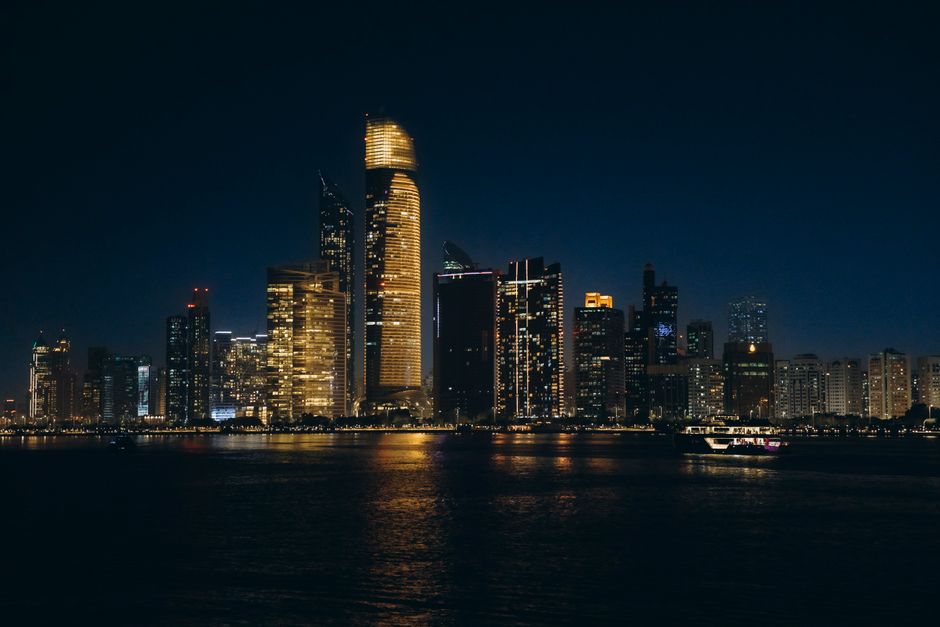
Startup ecosystems have traditionally been linked to iconic hubs—Silicon Valley for tech, London for finance, Singapore for Asian expansion, and New York for global commerce.
Today, however, new centers are emerging, showing that a thriving venture needs more than just funding.
The most recent Global Startup Ecosystem Report 2026 placed Abu Dhabi inside the world’s Top‑50 emerging ecosystems, with its ecosystem value jumping to US$73.4 billion—a rise of more than 3,000 % since the second half of 2023. The growth stems from a well‑connected innovation network and strong performance in areas such as artificial intelligence, financial technology, climate solutions, Web3 and digital assets.
Numbers alone do not tell the whole story of why founders pick one location over another. In discussions with founders who moved their overseas ventures to Abu Dhabi, a clear pattern emerged: the emirate’s combination of investment, talent, institutional backing and infrastructure creates a fertile ground for scaling and reaching international markets. The jurisdiction permits full foreign ownership for many mainland activities and in its free‑zone areas, while government agendas prioritize diversification. Initiatives such as Hub71 link tech companies with capital, incentives and mentorship.
One example is Archireef, a nature‑tech firm that blends ecological engineering with coastal construction to restore marine habitats. The company was founded in Hong Kong in 2020 by CEO Vriko Yu and CCO Deniz Tekerek, and opened an office in Abu Dhabi in 2022 before expanding to Singapore and Saudi Arabia.
Archireef’s move was supported by ADQ, a sovereign investor focused on essential infrastructure and global supply chains, as well as by Hub71’s ecosystem services. Early collaboration with the Environment Agency – Abu Dhabi helped the startup enter the market confidently.
“We were attracted to Abu Dhabi because it brings public and private players to the same table,” Yu says. “Our work only makes sense when budgeting, regulation and capital are discussed together – something that rarely happens in a single room elsewhere.”
“The agencies responsible for shaping the region’s coastline are ambitious, decisive and open to engaging with rigorous, science‑driven companies. A solid technical dialogue can progress from concept to deployment without leaving the same institutional framework, and that closeness between policy intent and execution keeps drawing us back,” she adds.
For a venture that sits at the crossroads of technology and ecology, operating in a market that grasps the nuances of such innovation is essential. Abu Dhabi underlines this by embedding environmental sustainability into its development agenda. A notable partnership sees the Environment Agency collaborating with Archireef to pilot coral‑reef restoration using 3D‑printed eco‑engineering components.
“Abu Dhabi is among the few jurisdictions actively weaving nature and biodiversity into its growth strategy, and it does so with speed and seriousness,” Yu remarks. “That mindset makes it an ideal place for nature‑tech companies.”
The emirate’s commitment goes beyond policy. It also offers access to coastal infrastructure and clients who embed ecological performance into projects from the start, rather than treating it as an afterthought.
“For us, the mix of forward‑looking regulation, live projects and clients designing with biodiversity from day one is the real infrastructure we need,” Yu explains. “Funding and licences matter, but it’s the alignment of policy and projects that lets us move from pilots to scale.”
When Archireef first expanded into Abu Dhabi, securing industrial and commercial licences was a priority. Those permits enabled the company to set up an eco‑engineering factory in Khalifa Economic Zones Abu Dhabi, the nation’s largest integrated economic‑zone operator, and to locate its headquarters in the Abu Dhabi Global Market, an international financial centre and free zone, facilitating local manufacturing.
“We tapped into a talent pool here that we couldn’t find elsewhere,” Yu notes. “Our work with natural materials demands expertise, and Abu Dhabi’s industrial workforce proved both highly skilled and curious—a rare combination. Whether we were turning clay, sand or oyster shells into construction‑grade blocks, the people on the ground helped us experiment and scale.”