
UAE President Hosts First Second‑Tier Leadership Programme in China

UAE President Hosts First Second‑Tier Leadership Programme in China
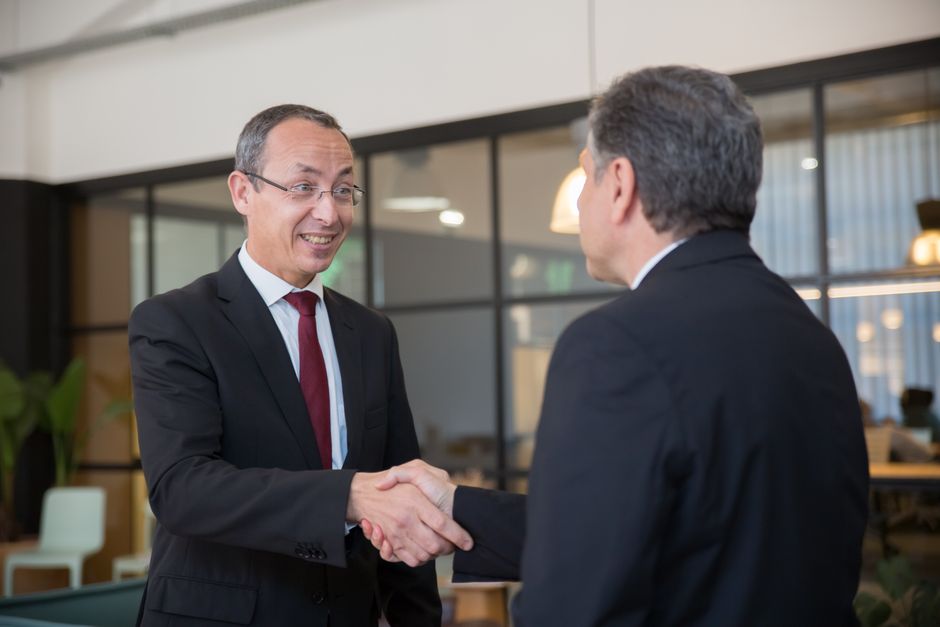
The United Arab Emirates President recently welcomed a distinguished group of participants to the inaugural UAE Second-Tier Leadership Programme China. This landmark gathering marks the first formal executive education initiative aimed at mid‑level leaders from UAE institutions, delivered on Chinese soil with presidential endorsement. The event underscores a strategic push to enhance leadership capabilities while deepening bilateral ties between Abu Dhabi and Beijing. Throughout the opening remarks, the focus keyword UAE Second-Tier Leadership Programme China was highlighted as a cornerstone of ongoing diplomatic and economic cooperation.
Significance of the Inaugural Initiative
The establishment of a dedicated leadership programme signals a maturation of UAE-China relations beyond traditional trade and investment frameworks. By focusing on second‑tier executives, the programme targets the talent pool that will drive future policy and operational decisions within UAE organizations. The presidential reception of participants lends high‑level visibility to the effort, indicating that leadership development is considered a national priority. This approach aligns with broader Gulf strategies to diversify economies and reduce reliance on expatriate talent.
UAE Second-Tier Leadership Programme China: A New Benchmark
The UAE Second-Tier Leadership Programme China sets a new benchmark for regional executive education by combining Chinese best practices with Emirati governance standards. Participants engage in workshops on strategic planning, digital transformation, and cross‑border collaboration, all tailored to the unique challenges faced by mid‑level managers in the Gulf context. The programme’s structure emphasizes peer learning, site visits to Chinese enterprises, and policy dialogues that bridge governmental and private‑sector perspectives. This blend of theoretical insight and practical exposure aims to equip leaders with tools to navigate increasingly complex markets.
Beyond skill development, the programme serves as a soft‑power conduit. By hosting Emirati leaders on Chinese territory, the UAE reinforces its presence in a strategically vital region for global trade. Chinese host institutions gain insight into Emirati business cultures, fostering mutual understanding that can translate into smoother regulatory processes and joint ventures. The initiative also demonstrates the UAE’s commitment to lifelong learning, a principle central to its Vision 2030 roadmap.
Key Objectives and Expected Outcomes
Several core objectives drive the UAE Second-Tier Leadership Programme China. First, the programme seeks to create a network of alumni who can act as ambassadors for UAE interests in China, facilitating smoother commercial engagements. Second, it aims to embed a culture of innovation and adaptability among participants, preparing them for rapid technological change. Third, the initiative intends to stimulate knowledge transfer, allowing Chinese expertise in areas such as renewable energy, logistics, and fintech to inform Emirati strategies. Finally, the programme hopes to strengthen governmental coordination, ensuring that policies are aligned across diplomatic, economic, and cultural domains.
- Build a cohesive alumni network bridging UAE and Chinese business communities
- Introduce cutting‑edge Chinese operational models to Emirati executives
- Facilitate joint research and pilot projects in priority sectors
- Promote cultural exchange to reduce misunderstandings and enhance trust
Early assessments suggest that the programme is already influencing participant perspectives. Many attendees report a heightened appreciation for China’s long‑term strategic planning and the importance of state‑led initiatives. Others note the value of direct exposure to Chinese policy implementations, which differ markedly from the UAE’s more market‑driven approaches. While concrete metrics are not yet available, the qualitative feedback indicates a promising start for such a pioneering effort.
Strategic Alignment with UAE Vision
The UAE Second-Tier Leadership Programme China aligns closely with the nation’s broader Vision 2030 objectives. Vision 2030 emphasizes the need for a knowledge‑based economy, where human capital drives growth rather than oil revenues alone. By investing in mid‑level leaders, the programme addresses a critical gap in leadership pipelines, ensuring that the UAE has a ready cadre of executives capable of steering complex, multi‑stakeholder initiatives. The focus on China also reflects the UAE’s pragmatic diversification strategy, recognizing Beijing as a pivotal partner for technology transfer and market expansion.
In addition, the programme supports the UAE’s soft‑power agenda. Hosting Emirati leaders in China showcases the country’s openness to collaborative learning and reinforces its reputation as a hub for international education. The presidential endorsement adds symbolic weight, signaling that leadership development is a matter of national importance. This combination of strategic, economic, and diplomatic considerations makes the initiative a multifaceted instrument of statecraft.
Broader Implications for Gulf Cooperation
The success of the UAE Second-Tier Leadership Programme China could inspire similar initiatives across the Gulf Cooperation Council (GCC) states. As regional economies seek to reduce dependence on external expertise, cultivating home‑grown leadership talent becomes essential. The Chinese model of structured, government‑backed executive education provides a template that can be adapted to local contexts. Moreover, a shared learning platform among GCC nations could enhance collective bargaining power in negotiations with larger economies.
Furthermore, the programme illustrates a shift in how Gulf states engage with Asia. Historically, diplomatic and commercial focus has centered on the West, but economic realities are prompting deeper ties with China, India, and Southeast Asia. By embedding Emirati leaders within Chinese institutional frameworks, the UAE is positioning itself at the forefront of this geopolitical reorientation. This proactive stance may encourage other Gulf economies to pursue analogous programs, thereby reshaping regional leadership dynamics.
Looking Ahead: Future Phases and Expansion
Planning is already underway for subsequent cohorts of the UAE Second-Tier Leadership Programme China. Future iterations may incorporate specialized tracks, such as sustainable infrastructure, digital governance, or humanitarian logistics, to address emerging sectoral needs. There is also discussion of rotating host cities, allowing participants to experience diverse Chinese economic zones and policy experiments. By expanding the curriculum’s breadth, the programme aims to produce leaders who can manage both national and international challenges with agility.
Long‑term, the initiative could evolve into a broader UAE‑China leadership alliance, potentially featuring joint research centers, exchange scholarships, and policy‑co‑development labs. Such an alliance would provide a structured mechanism for ongoing dialogue, ensuring that the relationship remains robust beyond the scope of any single programme. The presidential backing observed at the launch suggests that the UAE intends to maintain high‑level support for this strategic investment in human capital.
Conclusion
The UAE President’s reception of participants in the UAE Second-Tier Leadership Programme China marks a watershed moment for regional leadership development and diplomatic engagement. By launching the first executive programme of its kind on Chinese soil, the UAE signals its commitment to cultivating a new generation of innovators, strategists, and diplomats capable of steering the nation through an era of rapid transformation. The focus keyword UAE Second-Tier Leadership Programme China encapsulates the program’s dual mission: to elevate Emirati leadership talent while cementing deeper ties with a pivotal global partner. As the initiative unfolds, its impact on the UAE’s Vision 2030 goals, Gulf cooperation, and broader Indo‑Pacific relationships will become increasingly evident, setting a precedent for future collaborative learning endeavors. The UAE President’s endorsement ensures that this programme will remain a flagship component of the nation’s strategic human‑capital agenda, heralding a new era of empowered, globally‑aware leadership.